
Prevention begins with what you can measure.
Many conditions stay silent long before they become visible. When screening is quick, non-invasive and easy to repeat, clinicians get the chance to act early instead of late. Prevenova works across two areas of preventive care: bone health and tissue health.
Bone density at the point of care.
The Bindex device measures cortical bone thickness at the tibia with clinically validated accuracy — in under two minutes, with zero radiation, inside any consultation room. It costs a fraction of a DXA scanner.
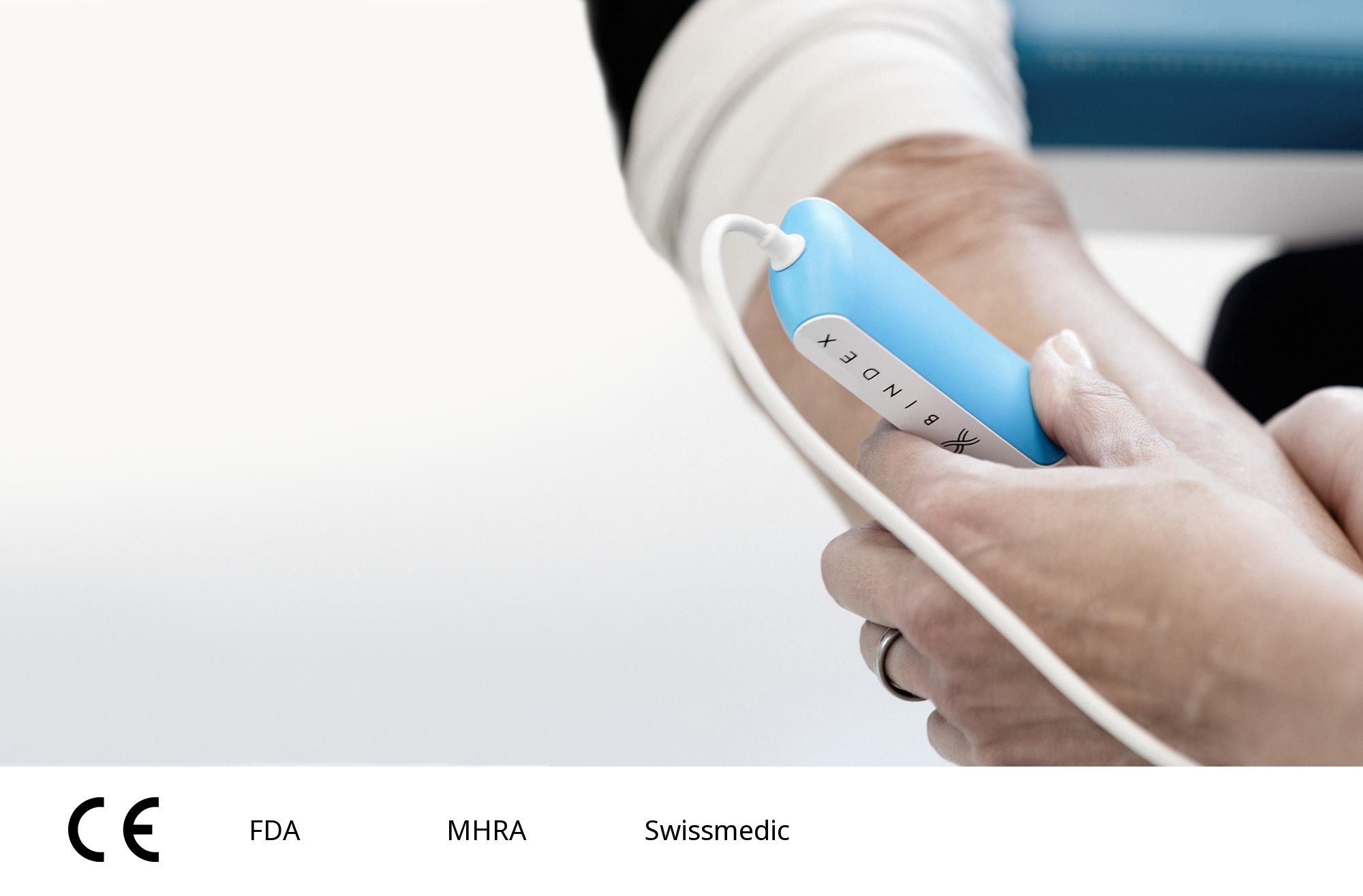
Ultrasound-based measurement. Safe for repeat screening and for younger patients at risk.
A handheld device that fits any clinic — no shielded room, no facility renovation, no scheduling.
Correlates with the DXA gold standard; peer-reviewed studies across European cohorts.
Three steps, ninety seconds.
- 01Position
Place the handheld probe against the patient's tibia.
- 02Measure
The device performs an ultrasound measurement of cortical thickness.
- 03Report
A clinically meaningful Density Index is produced — comparable to T-score categories.
Thermal imaging with Thermidas.
Thermidas thermal imaging visualises changes in skin temperature, adding early detection of pressure injuries, diabetic foot complications and tissue-related risks to routine preventive care.
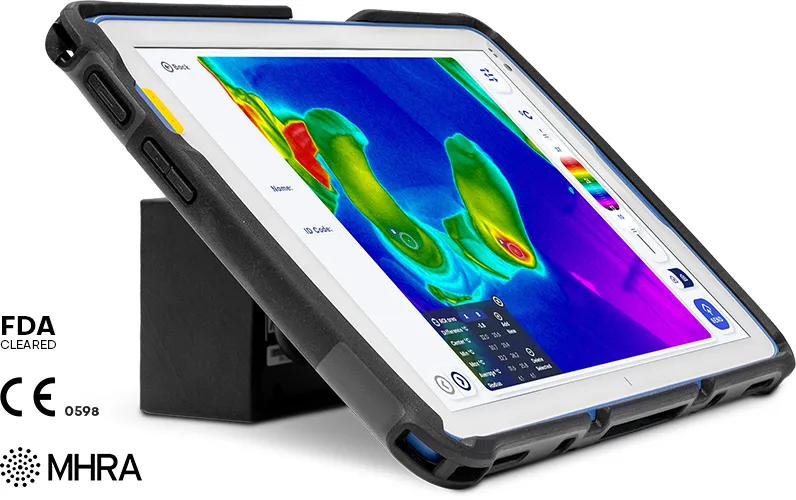
Surface temperature changes can point to tissue risk before it becomes visible to the eye.
A contact-free, radiation-free imaging method that fits comfortably into existing workflows.
A contact-free scan takes seconds at the bedside and can be repeated at routine check-ups.
Three steps, no contact.
- 01Capture
Record a contact-free thermal image of the area of interest, at the bedside.
- 02Compare
Surface temperature patterns are shown as a colour map, making asymmetries easy to see.
- 03Review
Clinicians assess those patterns in the context of the patient and the care plan.
Start with a conversation.
Tell us what you screen for today. We will tell you honestly whether either of these is the right fit for your setting.